.png)
How I Choose My Next Read

Choosing my next read has never been as simple as just grabbing a book and starting it. On the surface, it probably looks like that’s all it is—pick something off a shelf, scroll through a list, open the first page and go. But in reality, it’s a much more layered, almost instinctive process for me. It’s part habit, part mood-reading, part curiosity, and part letting myself be guided by whatever I’m craving in that exact moment.
Books, for me, aren’t just entertainment. They’re experiences I step into. They become the background noise of my mornings, the thing I think about while making tea, the companion I carry from room to room until I finally sit down and fully sink into their world. So choosing the next one matters more than it probably should in a practical sense—but emotionally, it always does.
There are days when I know exactly what I want. I can almost feel the kind of story I’m looking for before I even open a list. And then there are days where everything sounds good and nothing feels quite right at the same time. Those are the days where choosing a book becomes less about logic and more about trust—trusting that something will click when it needs to.
I also think it’s worth saying that even though I love having a TBR—especially my seasonal ones that I plan out and get excited about—that list is never something I treat as fixed. It’s more like a guide than a rulebook. If I’m just not feeling a book that’s on my TBR in the moment, I won’t force myself to read it just because it’s “next.” I’ll happily set it aside and let my mood lead me instead.
For me, reading works best when there’s flexibility. A TBR gives me structure and excitement, but my mood always gets the final say. That balance between planning and intuition is what keeps reading enjoyable rather than something that feels like an obligation.
Over time, I’ve realized I don’t really have one single method for picking my next read. Instead, I have a mix of patterns, instincts, habits, and little rituals that all overlap. Some are intentional. Some are completely accidental. And some I probably don’t even notice happening anymore. But together, they shape the way I move from one book to the next.
So this is a little look into that process—not as a rulebook, but as a reflection of how I personally find my next story.
Listening to My Mood

If there’s one thing that consistently guides my reading choices, it’s mood. More than genres, more than trends, more than even my TBR list, my mood tends to take the lead.
There are times when I want something soft and comforting, the kind of book that feels like slipping into familiar blankets. I don’t want to be challenged on those days—I want to be held by the story. Then there are other moments where I want something completely different. Something that pulls me out of my head, or something that makes me feel a little more awake and alert as I read.
And sometimes, it’s not even that clear. It’s just a feeling that something isn’t it, even if I can’t explain why. I might pick up a book, read a few pages, and immediately know I’m not in the right headspace for it. Other times, I’ll be surprised by what actually works once I give it a chance.
Sometimes, though, I reach a point where nothing seems to be clicking. My mood isn’t giving me any clear direction, every option feels a bit “off,” and even books I normally love don’t feel right. Over time, I’ve learned that this usually isn’t something I need to force my way through—it’s often a sign that I might just need a break from reading altogether.
That said, I don’t always step away completely. On days like that, I sometimes turn to my little prompt jar. It’s just a simple collection of reading prompts I can pull from when I feel stuck. Instead of trying to choose a book from pressure or indecision, I’ll use a prompt as a gentle nudge and see if anything suddenly clicks from that angle.
Sometimes it works immediately and gives me a clear direction. Other times, it just confirms that I’m not quite ready to read yet—and both outcomes feel useful in their own way.
I’ve learned that reading doesn’t always need to be forced into structure. Mood changes. Energy changes. Even the way I want to engage with stories changes. And letting that guide me has made reading feel a lot more natural and a lot less like a checklist.
The Power of Recommendations
Recommendations are one of the most influential forces in my reading life, even when I don’t consciously realize it at first. They don’t just add books to my list—they shape the atmosphere around what I think I might want to read next.
What makes recommendations so interesting to me is that they usually arrive with emotion already attached. It’s rarely just “this book exists.” It’s more like “this book destroyed me,” or “this book felt like a warm hug,” or “I couldn’t stop thinking about this story for days after finishing it.” That emotional framing matters a lot more than the actual synopsis sometimes, because it gives me a sense of experience rather than just information.
It also creates this slow-building curiosity. I might hear about the same book once and think nothing of it. Then I see it again in a different space, from a different reader, described in a slightly different way—and suddenly it starts to feel more present in my mind. Not in a pressured way, but in a quiet “this might be something I pick up eventually” kind of way.
But I don’t move on recommendations immediately. I’ve learned that timing matters just as much as interest. A book can sound perfect on paper and still not fit the moment I’m in. So instead of treating recommendations as instructions, I treat them more like invitations I can return to later.
Some recommendations sit on my TBR for weeks, months, sometimes longer, until something shifts internally and suddenly they feel right. Others never quite make it past curiosity, and that’s okay too. Not every book is meant for every season of reading.
Browsing and Serendipity
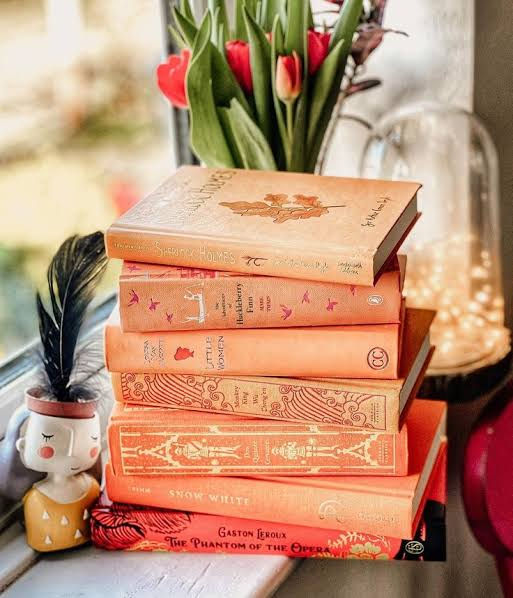
There’s a different kind of decision-making that happens when I’m not actively searching for a book at all.
Browsing, for me, is less about choosing and more about noticing. I’m not usually looking for anything specific in these moments—I’m just letting myself look around and see what stands out. And surprisingly often, something does.
It might be something very small and hard to explain. A cover that creates a certain feeling before I even know what the story is about. A title that sounds intriguing in a way I can’t immediately rationalize. Or a short description that contains just enough curiosity to make me pause for a second longer than usual.
That pause is usually where the shift happens. It’s not a big dramatic decision. It’s more like a quiet internal “oh, I might actually want to read that.” And once that thought appears, it tends to linger.
What I like about serendipitous discovery is that it removes pressure completely. There’s no expectation that I should pick something “useful” or “important” or even something from my TBR. It’s just exploration. And because of that, the choices feel lighter somehow, even though they can end up being incredibly meaningful later on.
There’s also something fun about not knowing why I’m drawn to something. I don’t always have a logical explanation for it, and I don’t think I need one. Sometimes a book just feels right in a way that bypasses reasoning altogether.
Series vs Standalones
When I think about what I want to read next, I often find myself considering structure before content.
Series and standalones offer two completely different reading experiences, and the difference between them usually shows up in how much emotional or mental space I want to give a book.
Series feel like commitment in a comforting way. Once I’m invested, I already know I’m going to be spending more time in that world. There’s a familiarity that builds with each installment—the characters start to feel more known, the setting becomes more vivid, and the emotional arcs stretch out in a way that feels gradual rather than contained.
Because of that, I often turn to series when I want consistency. There’s something reassuring about already understanding the tone of a world before I even start the next book. It makes slipping back into it easier, almost like continuing a conversation I already know how to follow.
Standalones, though, offer a different kind of satisfaction. They’re complete on their own, which means there’s a clarity to them that series don’t always have. You begin, you move through the story, and you reach an ending that doesn’t require anything else afterward.
That makes standalones feel very intentional. They’re often what I reach for when I want a full experience without ongoing commitment. There’s something refreshing about knowing I can fully immerse myself in a story and then close it completely before moving on to something entirely new.
Most of the time, I don’t consciously choose one over the other in a structured way—it’s more instinctive than that. I just notice whether I’m leaning toward familiarity or finality in that moment.
Seasons and Surroundings
I’ve come to realize that my reading choices are quietly shaped by my environment more than I used to notice.
Seasons play a subtle role in this. Certain types of stories just feel more aligned with certain times of year, even if I don’t intentionally plan it that way. Lighter, faster reads tend to feel more natural during brighter, busier periods, while slower or more reflective books often feel better suited to quieter seasons.
It’s not a strict rule I follow, but it shows up often enough that I’ve started paying attention to it. There’s something about external atmosphere influencing internal reading choices that makes the whole experience feel more connected to real life.
Even beyond seasons, my immediate surroundings matter more than I expect. The way a room feels, the time of day, the level of noise or quiet—all of these things influence what I feel capable of engaging with. Sometimes I don’t even realize it until I pick up a book and it doesn’t feel right, not because of the book itself, but because of the environment I’m in while reading it.
Other times, everything aligns perfectly without me planning it. The right book at the right time in the right space, and suddenly the reading experience feels completely immersive in a way that’s hard to replicate.
Balancing My TBR and Impulse Reads

My TBR plays a constant background role in my reading life. It’s always there, quietly holding all the books I’ve collected mentally or physically that I want to get to eventually.
But I don’t experience it as a strict sequence I need to follow.
Instead, it functions more like a pool of possibilities. Some books from it feel urgent when I look at them. Others sit there for a long time before they feel relevant again. And some I move past entirely in the moment because they simply don’t match what I’m currently drawn to.
Impulse reads, on the other hand, are what disrupt that structure in the best way. They remind me that reading doesn’t need to follow planning in order to be meaningful. Sometimes the books I pick up spontaneously end up shaping my reading mood more than anything I had planned.
What’s interesting is that I don’t see these two systems—TBR and impulse—as competing. They actually work together. The TBR gives me grounding and direction, while impulse reads keep things flexible and responsive.
Without both, my reading life would either feel too rigid or too chaotic. The balance between them is what keeps it feeling alive.
Trusting the Choice
At the core of everything is trust—not in a single method, but in myself as a reader.
Trusting that I can tell when something feels right, even if I can’t fully explain why. Trusting that if something doesn’t work, I’m allowed to stop. And trusting that my reading preferences aren’t fixed—they shift, and I can shift with them.
There’s no formula I follow that guarantees a good reading experience. Instead, there’s awareness. Awareness of what tends to work for me and what doesn’t, and a willingness to adjust without overthinking it too much.
That kind of trust makes choosing a book feel less like a decision I need to get right and more like something I get to experience.
The Quiet Joy of Choosing
There’s a moment right before starting a new book that I’ve always found quietly satisfying.
It’s the point where I’ve already decided what I’m going to read, but I haven’t yet fully entered the story. Everything is still ahead of me. I don’t know the tone yet in a lived sense. I don’t know how I’ll respond emotionally. I don’t know which parts will stay with me afterward.
That in-between space feels important. It’s not quite anticipation, not quite curiosity—it’s something softer than that. A kind of openness.
And I think that’s part of why choosing a book matters so much to me. It’s not just selecting a story—it’s stepping into a possibility.
Choosing my next read isn’t something I overthink in a structured way—it’s something I move through naturally. A mix of mood, curiosity, timing, and instinct all working together in ways I don’t always notice in the moment.
And I think that’s what makes it fun.
Every book I choose feels like a reflection of where I am at that time, even if I don’t realize it right away. And every new story is a chance to step into something slightly different, even if just for a little while.
I’d love to know how you choose your next read. Are you a mood reader? A planner? Someone who sticks to a strict TBR, or someone who picks purely on impulse? Let me know in the comments or share your own process—I always find it fascinating how different everyone’s reading habits can be.

May your heart stay warm, your pages stay full, and I’ll meet you in the next chapter.


Comments